Richard the Lionheart and the Château de Beynac
Arriving without a car?Every car park in the village is paid, all year, and the top one fills first in summer. A half-day tour from Sarlat drops you in the village and takes you on to Domme and the river; every option cancels free up to 24 hours before.
Check availabilityWhat actually happened in 1194
Adhémar de Beynac had been lord since 1147 and died in 1194 with no direct heir. The castle fell to the Duke of Aquitaine to dispose of, and the Duke of Aquitaine at that moment was Richard I of England. He gave Beynac to Mercadier, a mercenary captain who had commanded his fortresses in Aquitaine during the crusade and who was, by any reading, the most reliable pair of hands available on this stretch of river. Richard himself died in 1199. Mercadier was assassinated at Bordeaux the following year, and the castle went back to the Beynac family, who held it for another five and a half centuries. The full line, 1147 to now.
The castle he did raise: Château Gaillard
The question typed most often around this castle is which one Richard the Lionheart built, and the answer is not this one. Château Gaillard, above the Seine at Les Andelys in Normandy, went up between 1196 and 1198, at speed, to hold the Norman frontier against Philippe Auguste. That is Richard’s castle in the sense the question means. Beynac is a castle that passed through his hands for six years and was already standing when it did.
Why the name is on the castle anyway
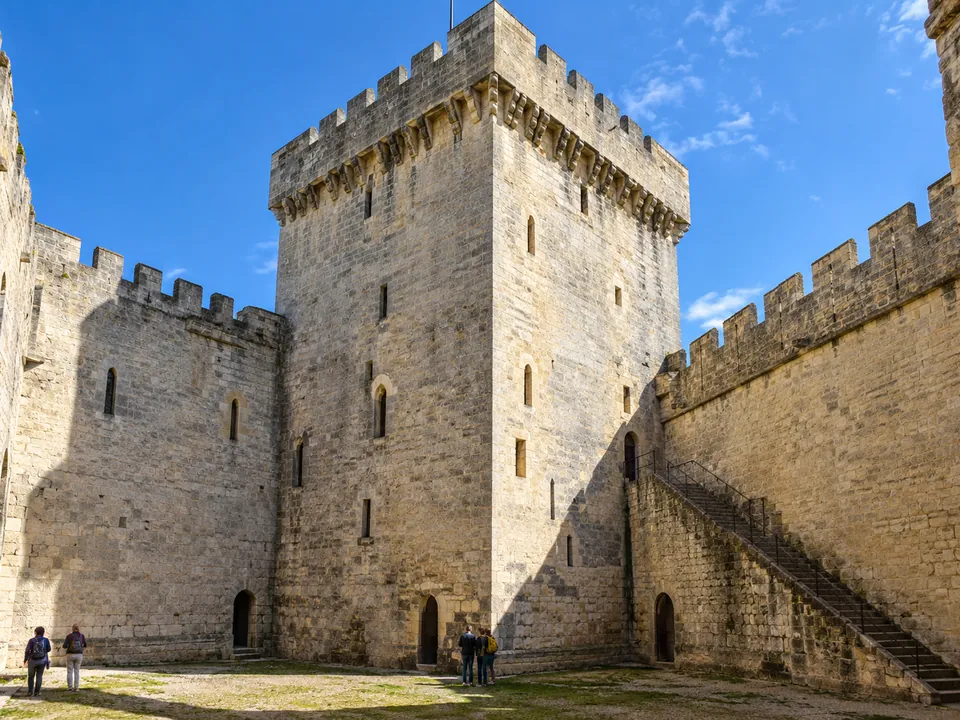
The castle markets itself as the castle of Richard the Lionheart, and the entry ticket includes an exhibition called Beynac in the time of Richard the Lionheart and Eleanor of Aquitaine. That framing is fair as far as it goes: this was Plantagenet Aquitaine, Richard held the duchy, and for six years the castle was his to give. It becomes wrong only when it is stretched into building or residence, which the sources do not support. The site says so plainly because it is the single most repeated error about Beynac. What the ticket and the exhibition cover.
Local tradition also puts Simon de Montfort at Beynac in the late twelfth or early thirteenth century, with Philippe Auguste intervening in 1217. The castle’s own account carries it; the documentary trail is thin, so it is worth hearing as tradition rather than as record.
Where to see the Plantagenet story
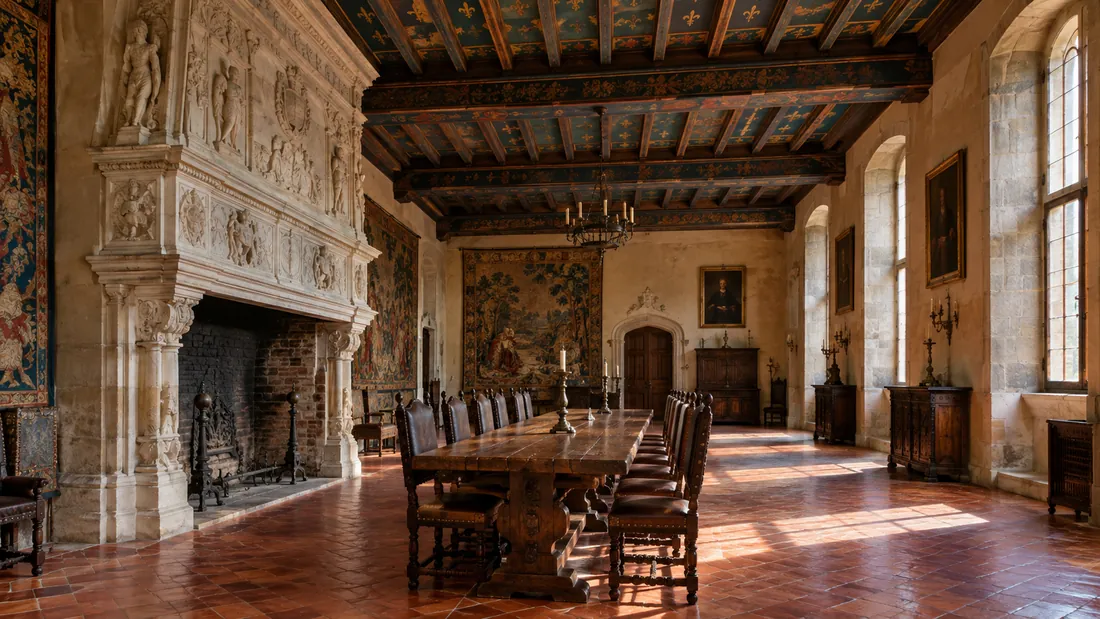
The exhibition sits inside the standard visit, which runs about an hour and is self-guided with commentary on your own phone. The rooms that carry the period best are the keep and the hall of the guards; the Salle des États and the painted apartments are later. The rooms in order.
Book entry with the Richard and Eleanor exhibition
The castle’s own entry ticket: the rooms, the exhibition on Beynac in the time of Richard the Lionheart and Eleanor of Aquitaine, and the bookshop. From around seventeen euros, free cancellation up to 24 hours before.
Frequently asked questions
What castle did Richard the Lionheart build?
Château Gaillard, at Les Andelys in Normandy, raised between 1196 and 1198 to hold the Norman frontier. He did not build Beynac, which was already standing when it came into his gift in 1194.
Did Richard the Lionheart live at the Château de Beynac?
No source says so. As Duke of Aquitaine he disposed of the castle in 1194 after Adhémar de Beynac died without a direct heir, and gave it to his captain Mercadier. The wider history.
Who was Mercadier?
A routier captain who commanded Richard’s Aquitaine fortresses while the king was on crusade. He held Beynac from 1194 until he was assassinated at Bordeaux in 1200, after which the castle returned to the Beynac family.
Why is Beynac called the castle of Richard the Lionheart?
Because it passed through his hands as Duke of Aquitaine, and the entry ticket includes an exhibition on Beynac in his and Eleanor of Aquitaine’s time. What you actually walk through.